 |
|
 |
 |
Save the Last Dance |
 |
Sara Johnson is the best ballerina in her
small Illinois town. So says her closest friend
and personal cheerleader. But Sara’s sights
are set much higher than Midwestern
community auditoriums—she wants Julliard.
But on the day of her big audition, Sara’s mom
is killed in a car accident, plunging her into a
world of guilt, confusion and ... hip-hop.
Sent to live with her thus-far-disinterested
father, Roy, in urban Chicago, the very white
Sara has a lot to learn. With gutsy,
mature-beyond-her-years teen mom Chenille
Reynolds tutoring her in black street chic
("slammin’," not "cool"; spaghetti straps, not
button-ups from The Gap), Sara learns how to
protect herself, where not to walk at night and
how to be real. She also falls in love with
Chenille’s brainy brother, Derek, who, among
other things, teaches her to hip-hop with the
crowd at Steps, a night club hangout where
Sara must prove herself to her new
peers.
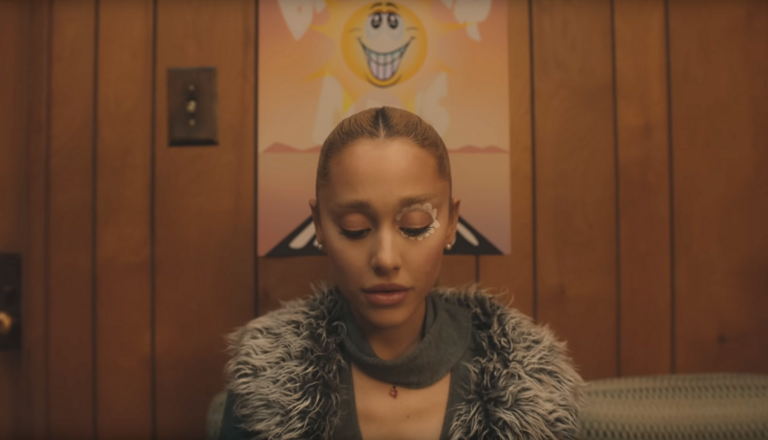
Caught in two very different sets of
circumstances, Sara and Derek push each
other to rise above. She needs a reason to
pursue ballet in spite of her grief and regret
over her mother’s death. He needs a shove to
walk away from his "thuggin’" pal Malakai and
go after Georgetown and med school. Adding
the social pressure of an interracial
relationship complicates matters for both, but
it’s their honesty and care for each other that
drives them to break out of oppressive
environments, both external and
self-imposed.
•
positive elements: Life isn’t easy for
these families, but this film lauds
reconciliation and perseverance wherever it
can. Chenille and Derek’s dad is never
mentioned, and their mother was a drug
addict, prostitute and deserter. Still, raised by
their grandmother, Chenille and Derek have a
strong family bond. He helps his sister take
care of her son in the absence of the boy’s
father. And when Derek receives his
Georgetown acceptance letter, it’s an
celebratory occasion for the entire family.
Likewise, Sara’s family has been torn by
divorce, and she and her dad are initially cold
toward each other—so cold that she calls him
by his first name throughout the film. But her
closeness with her mother is showcased, and
even with Dad, there’s hope. Though at first he
seems to mirror her aloofness, Roy makes
the right choice and deliberately begins doing
things to care for Sara. By the end of the
movie, he has tenderly told her he loves
her.
Save the Last Dance tackles touchy
urban issues such as the need for strong,
responsible African-American men in
inner-city communities. It doesn’t glorify
Chenille’s life as a single mother, but shows
the heartbreak of raising a child whose father
is unreliable and unsupportive. Derek is a
hero for studying hard and setting his sights
high, but the film also acknowledges that,
without extraordinary academic or other talent,
opportunities to get out of the ghetto are all but
non-existent.
Derek struggles with the choice between
loyalty to Malakai ("I’m down wit him; I’m just
not down wit what he does.") and the higher
good of avoiding revenge and possible
murder.
For a teenage romance, Derek and Sara’s
relationship is surprisingly unselfish and
honest. They challenge each other to grow.
They’re willing to discover each other’s
interests. Even after counting the cost of
ridicule from friends, Derek stands by Sara
and welcomes her into his world.
Unfortunately …
•
sexual content: What starts out
looking sweet and respectful (Derek offers to
walk Sara home and waits several dates
before kissing her goodnight) turns into an
implied sexual tryst on the couch. (And
demonstrates very poor judgment on Sara’s
part—she shows Derek around her home for
the first time, then tells him, "Dad’s at work
right now. He’ll be gone all night.") Sara and
Derek also stage a public makeout session
on the subway in order to disgust and
embarrass a nosy and judgmental fellow
passenger.
The hip-hop style of dance that’s at the
artistic center of the movie pulses with sexual
energy. Bodies packed onto a dance floor.
Short, tight and suggestive clothing.
High-contact dancing that some have referred
to as "sex with clothes on." Realistic?
Certainly. Beneficial? Hardly. And hip-hop isn’t
the only dance that’s sexy. Spotlighted scenes
from the Joffrey ballet that Sara and Derek
attend together emphasize the harmony of
men’s and women’s bodies in very sensual
ways.
Additionally, several
conversations—mostly among teen
guys—include crude and disrespectful
references to sex.
•
spiritual content: Twice, a friend from
her old home offers to pray for Sara. This
kindness is not ridiculed, but it’s clear that
cute suburban prayers are something Sara
leaves behind when she moves to the city. In
Chicago, prayer is nice but self-assertion is
what she must depend on for protection.
Besides, Sara’s friend may be fond of prayer,
but she’s still not opposed to using Jesus’
name inappropriately.
•
violent content: Two car-crash scenes
are not graphic, but briefly show bloody
injuries. Drive-by shootings demonstrate the
unavoidable violence and revenge of gangsta
life. A scene in an out-of-the way school
bathroom portrays a male student beating up
a female student for drug money. Malakai
starts a brutal fist-fight at Steps, kicking his
rival after he’s down. Sara gets into a girl-fight
with Nikki, who is jealous over Derek, and
Derek responds in kind by slugging Malakai in
the face to defend Sara.
•
crude or profane language:
Dozens of instances. Some of it is
harsh, but most is the "conversational"
profanity common in all too many high
schools (the most obvious example is the
constant substitution of the s-word for "stuff").
B--ch and a-- also get a workout, most often
representing the misogyny of gangsta-speak.
Particularly disappointing is that the only time
the f-word is uttered, it’s Sara who uses it.
There are a few crude sexual references and
misuses of God’s name. Several songs
played at Steps sport profanity.
•
drug and alcohol content: Steps is not
only a club, but a bar. While alcohol is played
up only in one scene (where it’s obvious that
Sara is being initiated into the world of booze),
much is made of the fact that many of the
club’s patrons are high school students toting
fake IDs. Roy smokes habitually, as do a
number of the high school students, including
Malakai.
•
conclusion: Save the Last
Dance nicely captures the contrast
between Sara’s old world and her new one.
The colors are different. The language is
different. The temperature on the dance floor
is very different. And in this new world,
Sara is different. There is obvious growth
associated with leaving behind a comfortable
world ("where everything makes sense") and
becoming vulnerable in a place where life is
raw. The intentional comparison of ballet and
hip-hop as "art forms" could inspire
stimulating discussion.
But here’s the dilemma of urban life:
Poverty is not good. Broken families are not
good. Illiteracy. Fatherlessness. Drive-by
shootings. Not good. No one denies these
things. But, as Chenille says, "gettin’ the he--
up outta here" is tough, and not many can
manage it. So those who do are ridiculed, and
those who don’t must find something to
exult in. In this film hip-hop dancing becomes
the answer—it’s seen as a release, a
common ground, a thing of beauty in the dingy
world of the city. Unfortunately, its simmering
sexuality (and the violence and misogyny of its
accompanying lyrics) can only add fuel to a fire
that’s already done great damage to the urban
world. The flaw in Save the Last Dance
is the fact that it revels in hip-hop’s beauty
without acknowledging its error. That
omission, coupled with excessive foul
language (for a PG-13 film), teenage sex,
smoking and drinking greatly weakens the
overall impact of a fistful of magnificent
messages.
|
 |